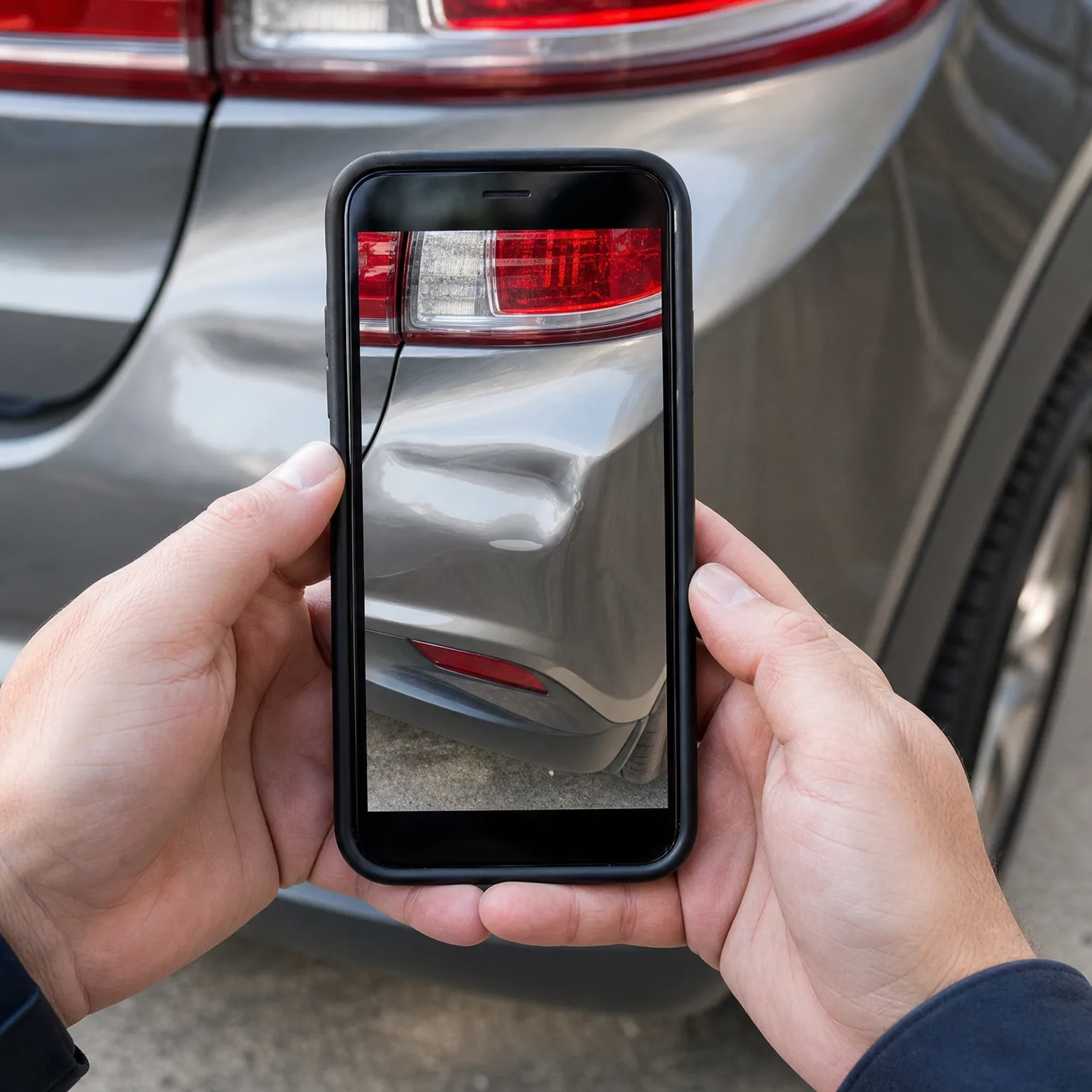
What Does It Mean Your Driving Will Be Monitored
It means an app or device on your teen's drive records hard braking, speeding, and phone use, and sends a score to the insurer.
Why insurers want to watch before they price the risk
A new driver is a question mark to an insurer. They have no history to look at, so the company either guesses using age and location, or it asks for real data instead. Monitoring is the data option. It replaces a guess based on statistics about teen drivers in general with a record of how this particular teen actually drives.
The technology usually works through a phone app or a small plug-in device, and it tracks a handful of specific behaviors. Hard braking, fast acceleration, speeding relative to the posted limit, how often the phone gets used while the car is moving, and sometimes the time of day driving happens, since late-night hours carry more risk. None of this is secret surveillance. The insurer tells you upfront what it collects and usually gives you a dashboard so you can see the same information your teen's score is built on.
What varies is how the score gets used. Some insurers apply it only as a way to lower the price further for good driving, so there's no downside to joining. Others set it as a condition of a discount that already got applied, meaning poor driving can take the discount away. A few use it to flag a driver for a future rate increase at renewal. This is exactly the kind of detail that differs by company and sometimes by state, so you'll want to ask directly how scores affect price, not just whether monitoring exists.
The cases where it works out differently usually involve a teen who drives very little, or who drives mostly on highways at steady speeds. Both tend to score well regardless of skill, because the app is measuring events, not judgment. A teen who drives rarely but intensely, say a short aggressive commute, can end up with a worse score than one who drives often but gently. Keep that in mind when you're deciding whether monitoring will actually reflect your teen fairly.

What the monitoring actually looks at and means for you
- Hard braking and acceleration These are the main signals of aggressive or distracted driving. Talk with your teen about smooth driving habits before the monitoring period starts, not after a bad score shows up.
- Phone handling while moving Many apps detect phone motion or screen use during a drive, even if it's just handling a call. Set the phone to do-not-disturb or driving mode before the car starts moving, every time.
- Speeding against the limit The app compares actual speed to road speed, not just a flat number. Ask your teen to treat speed limits as fixed, especially on roads where traffic flow makes it feel optional.
- Who sees the score and when Ask the insurer directly whether you and your teen can view the data in real time or only after it's finalized. Being able to check in along the way turns this into coaching instead of a surprise.
- How the score changes price Confirm whether a bad score removes a discount, raises a rate, or does nothing at all in the short term. This single answer should shape how much pressure you put on your teen about it.

A family tries monitoring for the first few months
A father signed his daughter up for monitoring right after she got her license, mostly because the insurer offered an initial discount just for enrolling. The app sat quietly on her phone and tracked her commute to school and weekend driving. A few weeks in, he noticed her score dipping on Friday nights specifically, tied to hard braking events around the same intersection near her friend's house.
Instead of treating it as a punishment, he brought it up casually, asked her what was going on at that intersection, and learned the light changed late and she was rushing it. They talked through leaving a few minutes earlier so she wasn't accelerating to beat the yellow. Her score improved within a month, and at renewal the discount held and even increased slightly. What mattered most wasn't the device itself, it was that the data gave them something specific to talk about instead of a vague conversation about being careful.
Now that you know how monitoring affects rates, compare quotes to find the insurer that rewards good driving most.
Will monitoring ever raise my teen's rate instead of lowering it?
It can, depending on the insurer's rules. Some programs are discount-only, meaning the worst that happens is you don't get the extra savings, your base rate stays where it was. Others tie an existing discount to ongoing performance, so a stretch of rough driving can pull that discount back at renewal.
A smaller number of insurers use monitoring data more broadly in pricing, which means a bad score could, in theory, push the rate up beyond where it started. This is the exact question to ask before enrolling, not after. Get it in writing or at least clearly explained, since the difference between these setups determines whether monitoring is a safe bet or a real risk for your budget.

Does my teen have to agree to monitoring or can I sign up without telling them?
Most insurers require the driver's consent, especially since the app runs on their phone or needs their cooperation to install a device. Practically, you'll want your teen on board anyway, since resentment over secret tracking tends to backfire. Ask the insurer what their consent process looks like, and consider making it a shared decision with your teen from the start.
Can I remove my teen from monitoring once it starts?
Usually yes, but check whether leaving early forfeits any discount already earned or reverts your rate to the standard teen price. Some programs lock in savings after a set period passes, while others only apply the discount while monitoring stays active. Ask specifically what happens to your price the moment monitoring stops, before you commit.
Does monitoring data ever get used against my teen outside of insurance?
Typically no, the data stays with the insurer for pricing purposes and isn't shared with law enforcement or other parties as a matter of routine. That said, policies on data use vary by company and sometimes by state law, so ask directly what the insurer's data sharing and retention policy is before enrolling, especially if this concerns you.