Who Is at Fault if Hit While Parallel Parking
The driver actively moving into the space usually carries most of the fault, but not always.
Why fault comes down to who was still moving
Fault in these crashes almost always traces back to which car was in motion and which was already settled. A driver backing into a spot owes a duty to check surroundings before and during the maneuver. If that car hits a vehicle already stopped or parked, the moving driver usually bears responsibility because the law expects them to yield to traffic and obstacles already in place.
It gets less clear-cut once the parking car has mostly completed the maneuver and is struck by someone else, like a driver who was speeding, distracted, or passing too closely. In that case, fault can shift partly or fully to the other driver, since the parking car had a right to finish settling into the space without being hit by someone not paying attention.
Some states apply pure comparative fault, which lets both drivers share blame in percentages, while others use rules that can bar a driver from recovering anything if they were mostly at fault. This changes how much it matters to document the scene well, because your share of fault can directly reduce what you're paid. Check your state's rule before assuming either driver is fully clear.
Insurers investigate using the same basic questions police do. Who was moving, who had the right of way, and what the physical damage pattern shows about the angle and speed of impact. Photos, witness accounts, and even nearby cameras often decide these cases, since there's rarely a ticket that settles it outright.
What if the other car was double-parked or blocking the space?
If the other vehicle was illegally stopped, double-parked, or obstructing the lane, that changes the picture. A car that isn't legally allowed to be where it is can carry significant fault even if you were the one moving into the spot, since you can't be expected to anticipate an illegally placed obstacle in the same way you'd anticipate normal traffic.
This is where photos matter most. Get pictures showing the other car's position relative to lane markings, curbs, or posted signs. If local parking rules were broken, mention that specifically when you file your claim, since adjusters weigh legal parking violations heavily when assigning fault.
The driver still moving almost always starts the conversation owing the explanation.
Once you know how fault gets decided here, compare quotes to see how a claim like this would actually affect your rate.
What actually decides who pays
- Who was in motion The car still moving into or out of the space is presumed responsible until evidence says otherwise. Note your exact position and speed if you can recall it clearly.
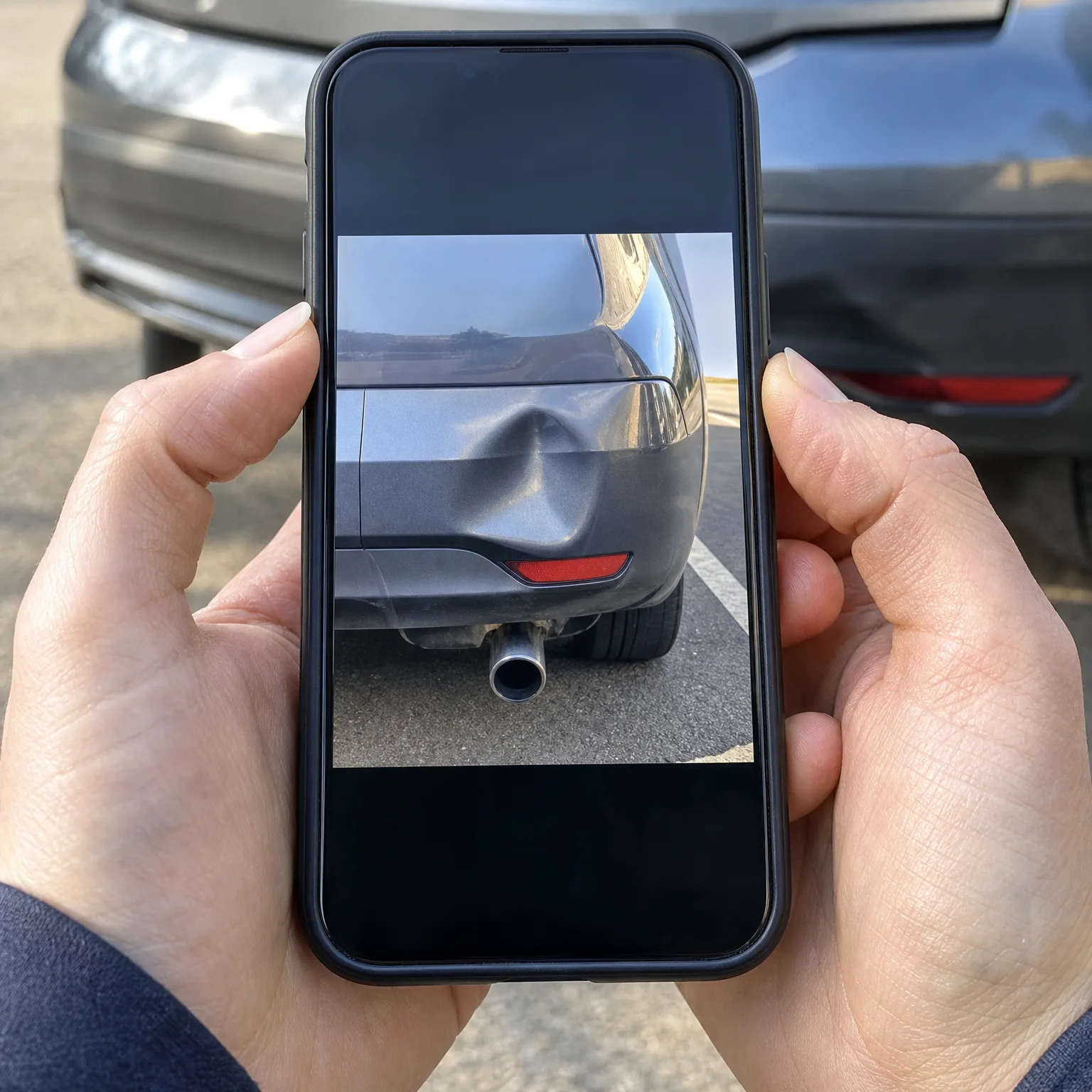
- Photos of the scene Pictures of both cars' final positions, skid marks, and any lane or curb markings matter more than verbal accounts. Take them immediately, before anything gets moved.
- Your state's fault rule Some states split fault by percentage, others cut off recovery if you're mostly responsible. Look up your state's comparative negligence rule so you know what's at stake.
- Witnesses nearby A bystander or nearby business with a camera can settle disputes insurers can't resolve from damage alone. Ask around before you leave the scene if it's safe to do so.
- Any parking violations A car that was illegally stopped or blocking the space can shift fault even if it wasn't moving. Mention any posted signs or markings when you describe what happened.
A reverse into a tight spot on a narrow street
A driver spotted an open space between two parked cars and began backing in slowly, checking mirrors and glancing back. Partway through, another driver came around the corner faster than conditions called for and clipped the rear corner of the car that was still backing in. Both drivers stopped, and the parking driver immediately took photos of the final position of both vehicles along with the skid mark left by the second car.
When the claim was filed, the parking driver's photos showed they hadn't fully entered the lane of travel, and a nearby shop's outdoor camera showed the second car's speed. The insurer assigned most of the fault to the driver who was speeding around the corner, since the parking driver had slowed to a near stop and was executing a normal maneuver. The parking driver still carried a small share of fault for being partially in the lane, which affected the payout slightly but didn't block the claim.
Does my insurance go up if I'm found at fault in a parking crash?
Usually yes, since most insurers treat any at-fault claim the same regardless of how minor the circumstances felt. The size of the increase depends on your insurer's rules and your claims history, so check whether your policy has forgiveness for a first incident. If fault is shared and your share is small, some insurers weigh it less heavily, but that varies by company.
Should I call the police for a minor parallel parking fender bender?
Yes, especially if there's any disagreement about what happened or visible damage. A police report adds a neutral record of positions and statements that can matter later if the other driver's story changes. Check your state's threshold for when a report is legally required, since very minor damage sometimes doesn't need one, but it still helps your claim.
Can I be blamed if I was already parked when someone backed into me?
Usually not, since a fully parked and stationary car isn't performing a maneuver that requires yielding. Fault typically falls on the backing driver unless you were parked illegally or in a spot that obstructed normal traffic flow. Check local signage and curb markings, since an illegal parking spot can shift some fault back to you.